I still break out in a cold sweat when I think about my elementary school days, surrounded by stacks of encyclopedias while trying to piece together a research paper. Or the anxiety of sitting in my high school gym, hoping I had enough blue books to fully answer every question on the final. The time, energy, and sheer brainpower it took to compare and contrast ideas felt overwhelming then. Looking back, it was challenging in a way that was very rewarding.
That’s why I sometimes worry about my kids growing up in a tech-driven, AI-saturated world, where answers appear instantly with a typed prompt or the click of a mouse. I can’t help but wonder what gets lost when the struggle to think and work through complexity is replaced by immediate access.
I owe much of my mental resilience and critical thinking ability to the fact that I didn’t have tools to do the analysis for me. It was just my brain, messy notes, textbooks, and a prayer.
Before I continue, let me say that I am, indeed, an AI supporter, but I’m also someone who’s deeply concerned about what it means for our brains.
With 40 years of life and schooling before the AI boom, I’ve seen the value of mental grit. While AI can act as a powerful “extended mind” to automate menial tasks and boost productivity, we can’t ignore the risk of cognitive erosion.
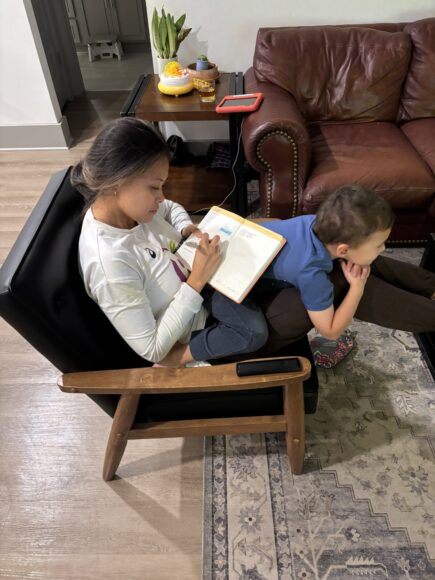
As my kids grow up with these tools at their fingertips, I find myself thinking deeply about what they might mean for long-term cognitive development. Research suggests this concern isn’t unfounded. In my work as a neuromarketer and brand strategist, I’m constantly immersed in brain science. Studies indicate that when students rely on AI for passive cognitive offloading — retrieving direct answers instead of engaging with the material — learning can actually suffer. Performance may improve in the moment, but skills often decline once the tool is removed.
If fully developed adults gravitate toward the path of least resistance, what happens when children, who are still wiring their brains, default to replacing their thinking instead of strengthening it? The goal isn’t to hand our kids shortcuts. It’s to help them use these tools as an extension of their thinking, not a replacement for the mental reps that keep the brain strong.
AI is a wonderful tool for shaving off time, but what we put into it is critical. If we use it to bypass the “effortful tasks” that build our brain’s fitness, we risk losing the very critical thinking and analytical skills that define us as humans.
If you stop using certain cognitive muscles, they weaken. And I don’t want a generation that knows how to prompt … but forgets how to wrestle with an idea.