If you’ve ever felt like the only one doing all the things around the house, I get it. As a mom of four-year-old twin boys AND a four-month-old baby girl, I know firsthand how exhausting the daily load can feel. But here’s the thing— kids are actually capable of helping more than we often give them credit for. In fact, giving them a role in the day-to-day can be a game changer, not just for our sanity, but for their development too.
In our home, we’ve started teaching our boys that being part of a family means everyone contributes in some way. We try to frame chores not as punishment, but as opportunities to help take care of the things we all enjoy. They eat off plates, so they help load the dishwasher. They wear clothes, so they help sort the laundry. They play with toys, so they help put them away. It’s not perfect, and no, our house isn’t always tidy—but it’s a team effort, and that’s what matters most.
One of our favorite tools is the chore chart we got from Lovevery. Each boy chooses five chores from a list of nine age-appropriate options, and they complete them before watching TV. We’re working to instill that “work first, play after” mindset that many adults (myself included!) still struggle with. They get to decide which chores they do, and we make sure they’re manageable and developmentally appropriate.
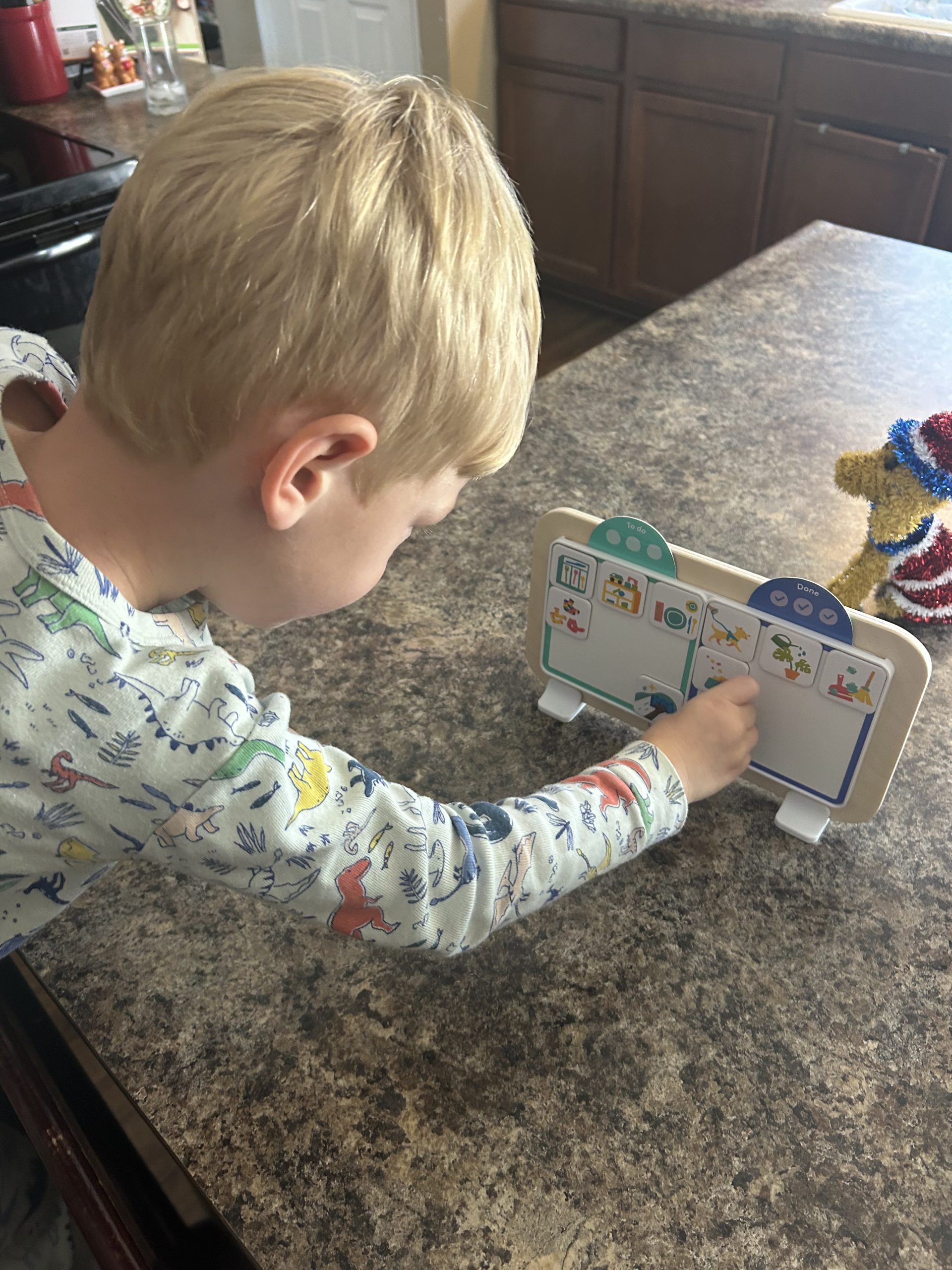
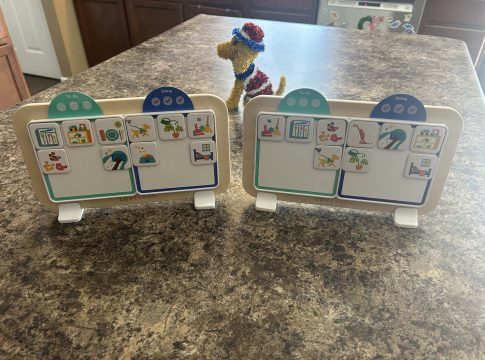
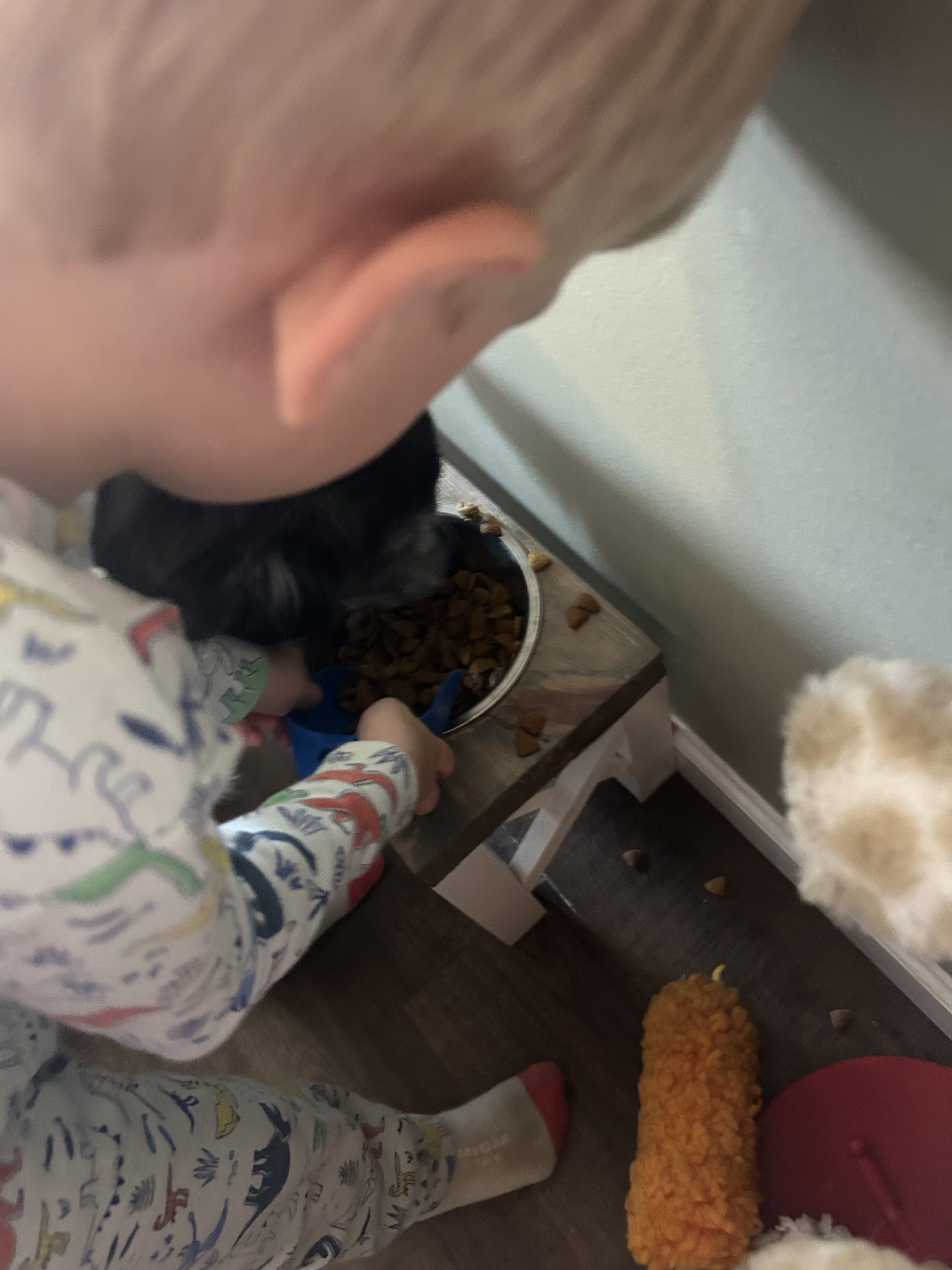
Are they doing the entire load of laundry or unloading the whole dishwasher? Of course not. But they are sorting silverware, matching socks, setting the table, watering plants, feeding the dog, and “making” their beds. Sometimes chores get swapped out based on what needs to be done— or what they’re most excited about doing.
And sure, toddler-vacuumed floors are never crumb-free. The table might get half-wiped. And yes, dog food trails occasionally lead from the closet to the bowl. But that’s okay. Because they’re helping. They’re learning. And they’re showing that they care about our home and each other.
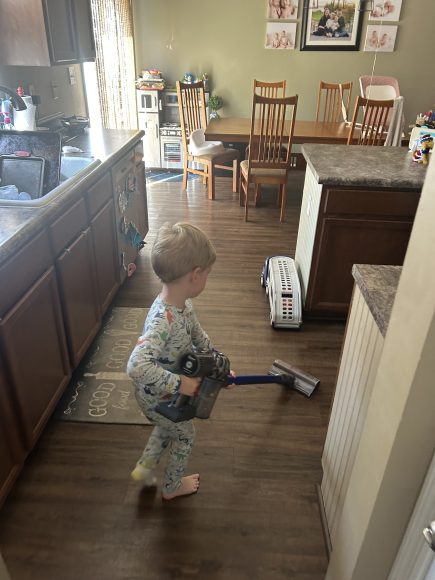
One unexpected bonus? Their involvement helps hold me accountable, too. If they’re making their beds, I’m more likely to make mine. If they’re putting away silverware, I’ll do the plates. We’re all in this together— and that sense of shared responsibility has brought our family even closer.
Do chores take longer? Absolutely. Does it turn into a full-blown production some days? Oh, definitely. But we make it fun. We laugh, we cheer each other on, and we all get in on the action. And we know that by starting these habits now, we’re laying a foundation that will (hopefully!) make things easier down the road.
Now, what happens when they don’t want to do chores? We let them know that’s totally fine— it’s their choice. But if they choose not to do chores, that also means they’re choosing to skip TV time that day. We talk a lot about how every action has a consequence— not as a threat, but as a life lesson. If we don’t clean the dishes, we can’t cook dinner. If we don’t wash our clothes, we run out of clean underwear. If we ignore the plants, they wither. That’s real life, and they’re learning to connect those dots.
Our goal isn’t perfection. It’s progress. We want our boys to grow up feeling empowered, not obligated. We want them to want to help, because they care about our home and our family. And we want them to see that every small act of responsibility— no matter how imperfect— is valuable.
So if you’ve been wondering whether your kids are old enough to start helping around the house, the answer is yes. Start small. Keep it simple. And celebrate every tiny win. Because when kids feel like part of the team, amazing things start to happen—even if the socks are still mismatched.
Age-Appropriate Chores for Kids
Ages 2–3: “I do it!” stage (with supervision)
-
Put toys back in bins
-
Help feed pets
-
Wipe up small spills
-
Put dirty clothes in the hamper
-
Help set napkins or placemats on the table
-
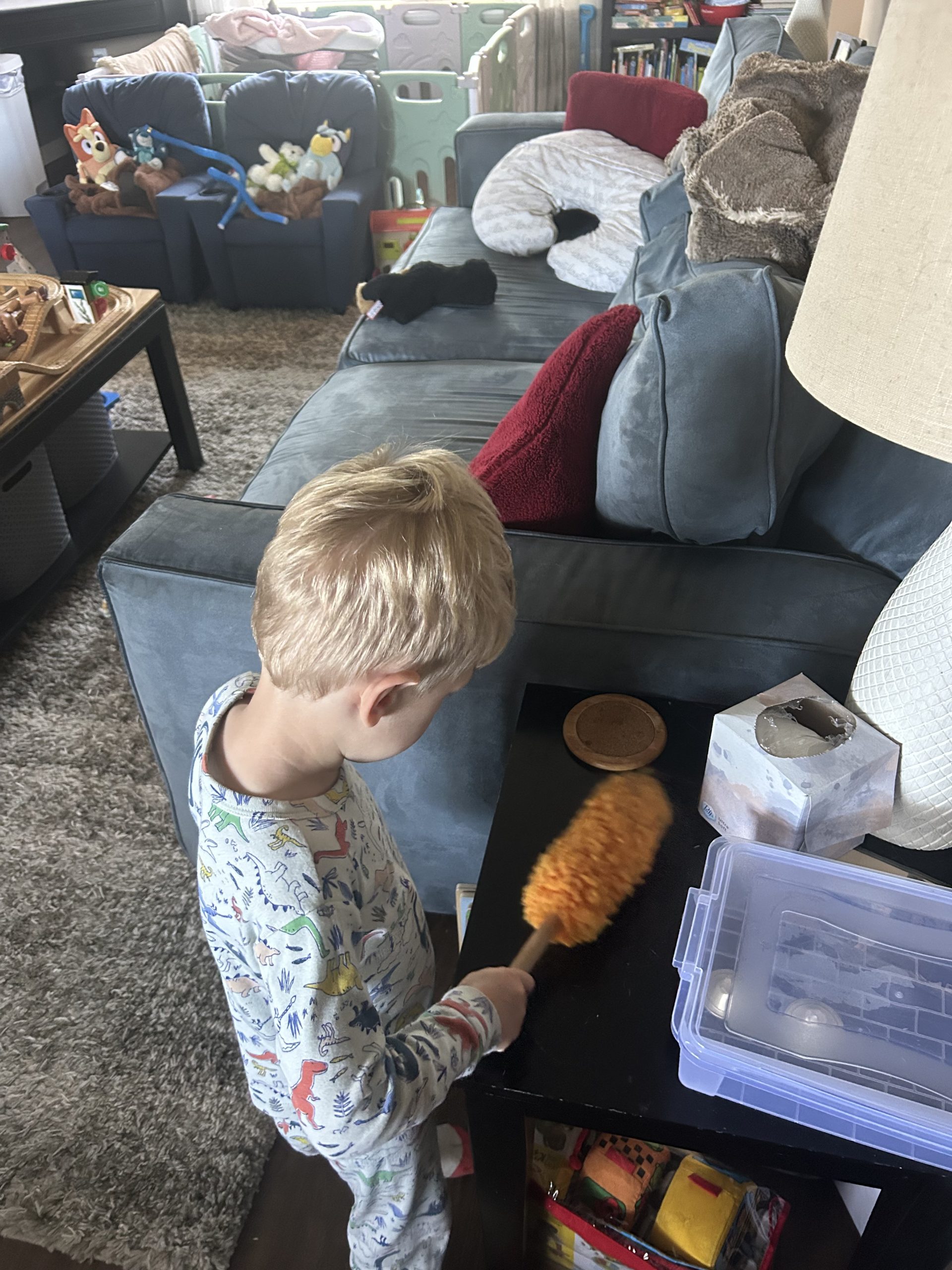
Dust baseboards or low surfaces
-
Water houseplants with a small cup
Ages 4–5: “I’m a helper!” stage
-
Make their bed (loosely is fine!)
-
Match socks or sort laundry by color
-
Set and clear parts of the table
-
Help put away groceries
-
Sweep small areas with a handheld broom
-
Wipe the table after meals
-
Feed pets and refill water bowls
-
Sort silverware from the dishwasher
-
Help pack their lunch/snack
Ages 6–8: “I can do it myself!” stage
-
Fold towels or simple clothing
-
Vacuum small rooms
-
Load/unload dishwasher (non-breakables)
-
Help prepare simple meals (sandwiches, snacks)
-
Take out bathroom trash
-
Clean up after pets
-
Water outdoor plants or garden
-
Make their own breakfast (with guidance)
Ages 9–12: “More responsibility, please!” stage
-
Do their own laundry (start to finish)
-
Clean their bedroom and bathroom
-
Load/unload entire dishwasher
-
Take out trash and recycling
-
Mop floors
-
Help with meal prep and cooking
-
Walk the dog
-
Watch younger siblings for short periods (if safe)
Teens: “Adulting in training” stage
-
Mow the lawn or do yard work
-
Cook simple meals independently
-
Grocery shop with a list
-
Deep clean kitchen or bathroom
-
Manage their own laundry and schedule
-
Babysit younger siblings
-
Run errands with supervision