Imagine this: You’re at your OB appointment leading up to your scheduled cesarean section, a date you’ve been counting down to for months. And just before the appointment ends, your doctor asks you if you would like to opt for an additional surgery, something with a strange name you’ve never heard of—an opportunistic salpingectomy. The immediate thought may be “wait, what???” and the urge to say no, but then the doctor adds another surprise: the procedure helps prevent ovarian cancer.
This exact scenario happened to a mom friend of mine not long ago. It’s a lot to decide in a short amount of time, especially since an opportunistic salpingectomy ends a woman’s ability to have a child without the assistance of IVF or a surrogate. But for women undergoing a C-section who know this is their last child, or for women who are in a different place in life who are having surgery, like a hysterectomy, it’s a surgical option worth considering. It’s safe to say you need to learn more about opportunistic salpingectomy.
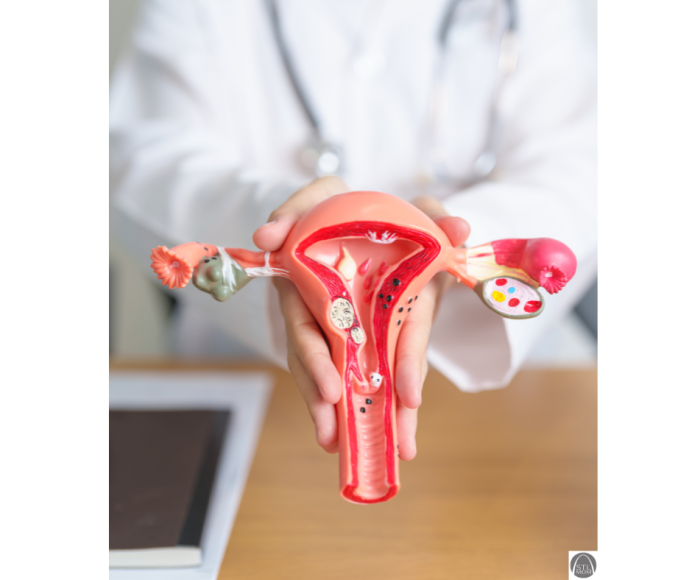
What is opportunistic salpingectomy?
The “opportunistic” part of an opportunistic salpingectomy is pretty straightforward once it’s explained. It means a woman is already undergoing surgery in or around the pelvic area, and the salpingectomy can be easily added into the surgical plan. Women who are eligible are often those who are undergoing a C-section or women who are having a hysterectomy.
The salpingectomy is when the woman’s fallopian tubes are removed from her body. In some respects, an opportunistic salpingectomy sounds like a tubal ligation, which is a form of permanent birth control. But they are different since a tubal ligation closes the fallopian tubes and leaves them in the body.
But even women who know their family is complete can feel reluctant to say yes to the procedure, knowing it will end their ability to conceive. It’s an emotional thing to work through. But there is a benefit to her long-term health, too.
Does an opportunistic salpingectomy prevent ovarian cancer?
Basically, yes. An opportunistic salpingectomy can prevent some forms of ovarian cancer. The relationship between the fallopian tubes and ovaries and ovarian cancer isn’t fully understood and is being researched, but studies that follow women who have had their fallopian tubes removed have had precancerous lesions that lead to ovarian cancer. That showed pretty clearly.
Women who had opportunistic salpingectomy had an 80% reduction in cases of ovarian cancer. And women who had a tubal ligation (where their tubes were left inside their body) had a reduced ovarian cancer rate for serous ovarian and peritoneal cancer by 41%. Those numbers indicate that ovarian cancer has something to do with fallopian tubes, and removing them, especially when done having children and undergoing another procedure, can only mean good things for cancer prevention.
It’s important to note that reducing the risk of any cancer doesn’t mean preventing it 100%. For some women at high risk due to their family history or being a carrier of the BRCA or Lynch Syndrome genes, removing their ovaries may also be a recommended step.
What is recovering like from opportunistic salpingectomy surgery?
Because women who have opportunistic salpingectomy are already recovering from a surgical procedure like a C-section or hysterectomy, the recovery process is about the same as it would have been without it. That’s part of the reason why surgeons suggest that the procedures be done together. Coupling them makes healing easier and reduces the number of surgeries, which lowers the risks that always come with surgery like infection, complications with anesthesia, and more.
How common is ovarian cancer? I don’t need to be worried, right?
Thankfully, cases of ovarian cancer have been decreasing in the U.S. It’s also notable that surgeries that help lower risk are becoming more common. So that could indicate efforts to prevent it are working.
That said, over 22,000 women in the U.S. are diagnosed with a form of ovarian cancer each year. Ovarian cancer doesn’t have a screening similar to the PAP-test for cervical cancer, symptoms can be easy to ignore, and it is harder to diagnose. Consequently, it is the deadliest gynecologic cancer in women.

What questions should I ask my doctor if I’m interested in exploring surgery to prevent ovarian cancer?
Gathering facts about opportunistic salpingectomy can be a great step towards prevention. Some important questions to ask your doctor could include:
- Am I at elevated risk of ovarian cancer (family history, genetic testing)?
- Am I a good candidate for opportunistic salpingectomy?
- If I do the salpingectomy, how much is it likely to reduce my risk in my situation?
- Does removing the fallopian tubes affect my fertility, hormones, or menopausal timing?
- Am I able to undergo IVF if I decide I’m not done expanding my family?
- What are the extra surgical risks or recovery differences vs. the surgery without the tubes removal?
- Will insurance cover doing the procedure as part of the operation I already need?
- Can you file a prior authorization for this through my insurance?
If you’re interested in preventing ovarian cancer and are open to an opportunistic salpingectomy, you also need to ask yourself if you’re done expanding your family. This can be where many women decide not to move forward because they aren’t sure. If that’s you, ask your gynecologist some questions so you can begin planning ahead for when you may be ready.
Where can I receive an opportunistic salpingectomy?
If you’re a woman in the St. Louis area and are found eligible, you can have the surgery performed at Siteman Cancer Center. WashU Medicine physicians are known for their prevention and treatment of gynecologic cancers. Plus, the National Institute of Health has recognized Siteman’s excellence in combating gynecologic cancers and awarded them an important grant, called a Specialized Program for Research Excellence, for further discovery.
If I wanted a tubal ligation, should I think about opportunistic salpingectomy instead?
The thing about healthcare is that it needs to be personalized for you, so it’s up to you to decide. Some women who are done having kids (and even women who don’t want to have children) explore tubal ligation as a form of permanent birth control. When having those consultations, asking your doctor about a salpingectomy could be worthwhile. This version of the salpingectomy isn’t “opportunistic” since there isn’t another surgery happening at the same time, but it offers strong benefits. Comparing one surgery to the other, the salpingectomy offers two advantages: the birth control you’re wanting plus a boost in ovarian cancer prevention compared to the tubal ligation. From that standpoint, it’s a win-win scenario.
Sources:
Salpingectomy for the Primary Prevention of Ovarian Cancer: A Systematic Review
Effect of Tubal Sterilization Technique on Risk of Serous Ovarian and Primary Peritoneal Carcinoma
Siteman Cancer Center: Symptoms and Risks of Ovarian Cancer
Siteman Cancer Center: Specialized Program for Research Excellence
 Andrea Martin is a Content Strategist at Siteman Cancer Center and joined the team in 2023. Her writing connects patients with helpful information as they navigate their cancer journey. While not a mom, she is a devoted helicopter parent to her cat, Captain.